

Tariffs 2026 is no longer driven purely by efficiency and cost arbitrage. Instead, it is being reshaped by a powerful mix of economic nationalism, geopolitical risk, and strategic tariffs. Governments are increasingly prioritizing domestic industries, supply chain security, and political leverage over free-trade orthodoxy. For business owners, investors, and policy watchers, understanding this shift is no longer optional—it is a competitive necessity.
From the United States and European Union to Asia and the Middle East, tariff regimes and trade policies are evolving rapidly, altering how goods move, how companies source, and how consumers ultimately pay.
Tariffs 2026 Economic Nationalism and Modern Era
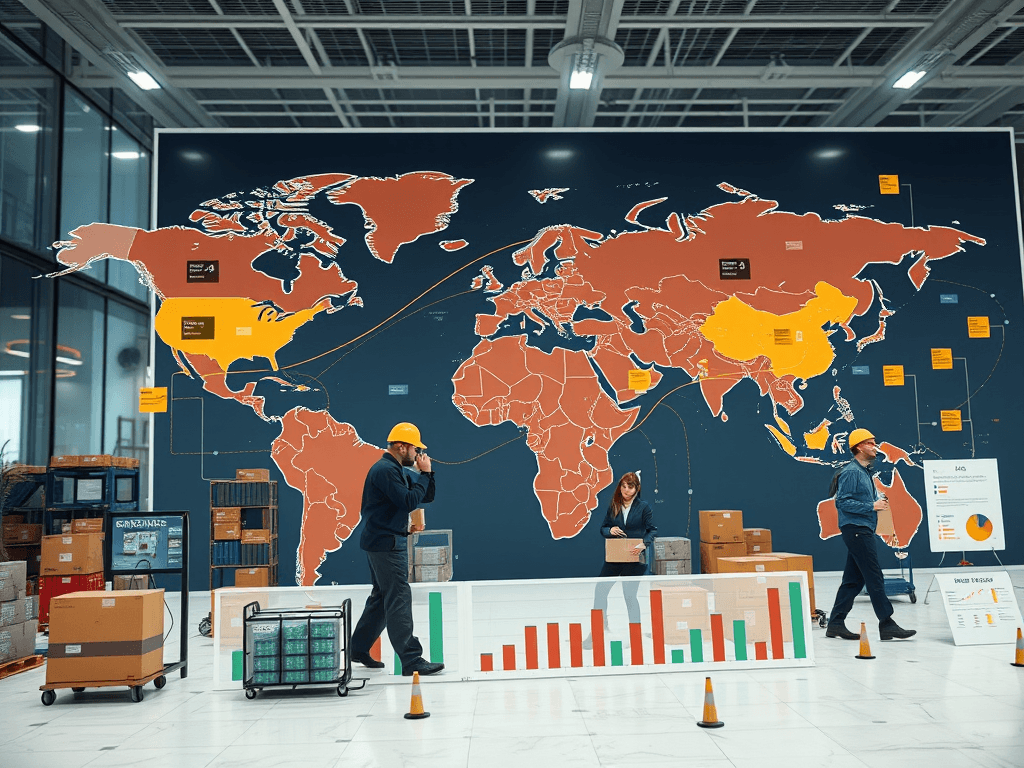
Economic nationalism is a policy approach where governments favor domestic businesses, labor, and industries over foreign competition. While it is often framed as protectionism, in 2026 it is more accurately described as strategic self-reliance.
Tariffs—taxes imposed on imported goods—are one of the most visible tools of economic nationalism. Unlike the blanket tariffs of earlier decades, today’s tariffs are more targeted. They focus on:
Critical industries such as semiconductors, energy, agriculture, and defense Countries viewed as strategic rivals or supply chain risks Products linked to national security, climate policy, or labor standards
The stated goals vary: protecting local jobs, reducing dependence on single-country supply chains, correcting trade imbalances, or responding to geopolitical tensions. The practical effect, however, is a fragmentation of global trade into regional and politically aligned blocs.
For investors and business leaders, tariffs are no longer short-term disruptions—they are structural features of the global economy.
How Tariffs 2026 guide Reshaping Economic Global Supply Chains
Supply chains in 2026 are being redesigned around resilience rather than pure cost efficiency. Companies that once relied heavily on single-country sourcing are now diversifying suppliers, relocating production, or adopting “friend-shoring” strategies—sourcing from politically aligned nations.
Key supply chain shifts include:
Regionalization of manufacturing, especially in North America, Southeast Asia, and the Gulf Higher inventory buffers to protect against tariff shocks and border delays Increased logistics complexity, as goods cross more borders with varying trade rules
Tariffs increase landed costs, but the hidden cost is uncertainty. Businesses now plan for multiple tariff scenarios, which has made trade compliance, customs classification, and documentation more strategic than operational.
This has also driven demand for cost control in adjacent areas. Many exporters and importers are actively seeking budget international shipping supplies to offset rising duties and transportation expenses. Packaging optimization, consolidated shipments, and smarter freight planning have become profit-preserving tactics rather than operational afterthoughts.
For deeper analysis on how companies are adapting their sourcing and logistics models, many executives now rely on supply chain insights by VersatilePath to stay ahead of structural trade shifts.
Impact on SMEs, Corporations, and Consumers
While large multinationals have teams dedicated to trade compliance and risk modeling, small and medium-sized enterprises (SMEs) face a steeper learning curve.
For SMEs, tariffs can:
Reduce margins overnight Disrupt supplier relationships Force sudden price increases that customers may resist
However, SMEs also have an advantage: agility. Smaller firms can pivot suppliers faster, test new markets, and adopt niche positioning that large corporations struggle to execute.
This is why adoption of logistics tools for small businesses has accelerated. Automated customs documentation, tariff calculators, and real-time shipping cost analysis are helping SMEs compete in a more regulated trade environment without building large in-house teams.
For large corporations, tariffs guide have accelerated:
Vertical integration (owning more of the supply chain) Strategic partnerships in tariff-friendly regions Increased lobbying and trade diplomacy efforts
For consumers, the impact is mixed. Some prices rise due to import duties, particularly for electronics, vehicles, and industrial goods. At the same time, domestic production incentives can stabilize local supply and, in some cases, create competitive pricing over the long term.
The broader consequence is that consumers are indirectly paying for resilience and national security through higher prices—but gaining stability in return.
Practical Business guide for Navigating Trade in 2026
In an era of persistent tariffs and economic nationalism, successful businesses are proactive rather than reactive. The most resilient companies are applying a combination of strategic, operational, and financial adaptations.
1. Diversify sourcing beyond cost considerations
Supplier selection now includes geopolitical alignment, trade agreements, and tariff exposure—not just price. Dual or triple sourcing is increasingly standard.
2. Build tariff costs into pricing models early
Instead of absorbing tariff shocks, leading firms transparently price risk into contracts and customer agreements.
3. Invest in trade intelligence and compliance
Understanding Harmonized System (HS) codes, rules of origin, and bilateral trade agreements can significantly reduce tariff exposure.
4. Optimize logistics and packaging
Reducing shipment volume, improving container utilization, and choosing the right Incoterms can partially neutralize tariff-related cost increases. This is where access to affordable solutions—such as budget international shipping supplies—directly supports profitability.
5. Leverage digital logistics platforms
Smart companies are integrating logistics tools for small businesses into their operations to automate paperwork, track regulatory changes, and forecast landed costs with greater accuracy.
6. Explore regional manufacturing and assembly
Even partial localization—final assembly or packaging in a tariff-friendly market—can change a product’s country of origin and tariff classification.
What This Means for Investors and Policy Watchers
For investors, economic nationalism introduces both risk and opportunity. Sectors aligned with domestic manufacturing, logistics technology, energy independence, and trade compliance services are benefiting from long-term policy tailwinds.
Policy followers should note that tariffs in 2026 are less about isolation and more about leverage. Governments are not abandoning trade; they are restructuring it around strategic interests.
The era of frictionless globalization may be over, but a more deliberate, politically aware global trade system is taking its place.
Actionable Takeaway
In 2026, tariffs are not temporary obstacles—they are permanent strategic variables. Businesses that treat trade policy as a core part of planning, invest in smarter logistics, and build resilient supply chains will not just survive economic nationalism—they will gain a competitive edge.




Нужна быстрая и надежная алкоголь круглосуточно москва — и вы получите заказ в кратчайшие сроки.
Клиенты отмечают удобство и выигрыш во времени, когда можно оформить заказ алкоголя и получить его не выходя из дома.
Проверка возраста при доставке требует надежных механизмов, чтобы минимизировать риск продажи несовершеннолетним.
Инвестиции в охлаждаемые склады, специализированные фургоны и обученный персонал окупаются через повышенное доверие покупателей и повторные заказы.
Маркетинг и ассортимент также трансформируются: сервисы предлагают персонализированные рекомендации и наборы для дегустаций, чтобы привлечь разных покупателей.
Ищете надежную прокат калининград премиум — заходите на сайт, чтобы сравнить модели и цены.
Также полезно сравнить предложения нескольких прокатчиков и уточнить условия возврата автомобиля в другой точке города или на границе с Польшей.
Лучшее решение для стильной поездки — это арендовать порше 911 в калининграде.
Обращайте внимание на скрытые платежи и условия возврата залога.
Ищете взять в аренду машину в калининграде недорого по суточно — выгодные условия и широкий выбор автомобилей ждут вас.
Аренда на выходные часто обходится дешевле и подходит для коротких выездов к побережью.
Нужна алкоголь на дом 24 прямо сейчас — быстро, надежно и без лишних хлопот.
Регулирование и саморегуляция отрасли будут определять её развитие в ближайшие годы.
Ищете автомобиль в аренду калининград — выгодные условия и широкий выбор автомобилей ждут вас.
Такой подход обеспечит комфортные поездки по Калининградской области и сохранит ваши средства.
Discover high-quality resources for your next project at dataset samples, offering curated, ready-to-use collections for research and development.
Curating high-quality datasets demands careful attention to diversity, representativeness, and annotation accuracy.
Different tasks require tailored dataset structures and labeling schemes. Time-series and sensor datasets demand synchronized timestamps and noise characterization.
Ethical and legal considerations shape dataset creation and sharing policies. Implementing consent processes, openness, and governance structures supports ethical usage.
Evaluation datasets and benchmarks enable objective comparison of models. Carefully constructed benchmarks highlight strengths and expose weaknesses of models in specific scenarios.
Different tasks require tailored dataset structures and labeling schemes.
Откройте для себя комфорт и стиль с дизайнерский диван — идеальный выбор для тех, кто ценит элегантность и высокое качество.
Стильные дизайнерские диваны играют ключевую роль в оформлении пространства, формируя визуальный центр комнаты.
Выбор производителя и мастерства изготовления также важен для сохранения формы и внешнего вида.
Дизайнерские коллекции охватывают множество стилей — от строгого минимализма до уютного ретро и индустриального лофта.
Практичность эксплуатации и простота чистки обивки оказывают большое влияние на комфорт использования дивана.
Нужна доставка алкоголя 24 прямо сейчас — быстро, надежно и без лишних хлопот.
Покупателю теперь доступен широкий ассортимент сортов и брендов прямо на экране смартфона.
Лучшее решение для стильной поездки — это рент автопрокат калининград.
Высокая посадка и современная электроника делают управление удобным.
Постройте уютный строительство каркасных домов спб, где качество и комфорт сочетаются с выгодной ценой.
Проекты каркасных домов легко адаптируются под личные пожелания владельца.
Постройте уютный каркасные дома спб, где качество и комфорт сочетаются с выгодной ценой.
Эксплуатация каркасного дома требует регулярного обслуживания и осмотра отделки.
Discover high-quality resources for your next project at ai data, offering curated, ready-to-use collections for research and development.
Curating high-quality datasets demands careful attention to diversity, representativeness, and annotation accuracy.
Different tasks require tailored dataset structures and labeling schemes. Natural language processing datasets often depend on tokenization choices and contextual annotations.
Ethical and legal considerations shape dataset creation and sharing policies. Privacy preservation techniques such as anonymization and differential privacy can mitigate risks.
Evaluation datasets and benchmarks enable objective comparison of models. Ongoing updates to datasets are needed to track changing domains and emerging patterns.
Language data collections must consider token boundaries, contextual tags, and consistent labeling conventions.
Нужна алкоголь доставка москва прямо сейчас — быстро, надежно и без лишних хлопот.
Безопасность и соблюдение закона остаются ключевыми факторами при доставке алкоголя.
Откройте для себя комфорт и стиль с диваны дизайнерские — идеальный выбор для тех, кто ценит элегантность и высокое качество.
Оттенок и фактура дивана способны визуально изменить пространство и задать тон интерьеру.
Дизайнерский диван обязан сочетать красивый внешний вид и удобство при ежедневном использовании.
Согласование дивана со стилем помещения помогает создать гармоничную и завершённую композицию.
Функциональные решения вроде съёмных покрытий и специальных обработок существенно увеличивают ресурс обивки.
Постройте уютный каркасный дом под ключ в спб цена, где качество и комфорт сочетаются с выгодной ценой.
В условиях переменного климата каркасный дом сохраняет тепло и комфорт.
Лучшее решение для стильной поездки — это mercedes benz cls 300 аренда в калининграде.
Маршруты вокруг курортов и лесных массивов идеально подходят для такого автомобиля.
Постройте уютный дом каркасный под ключ, где качество и комфорт сочетаются с выгодной ценой.
Ремонт крыши и замена отдельных панелей продлевают срок службы без капитальной реконструкции.
Discover high-quality resources for your next project at ai data, offering curated, ready-to-use collections for research and development.
Curating high-quality datasets demands careful attention to diversity, representativeness, and annotation accuracy.
Different tasks require tailored dataset structures and labeling schemes. Text datasets for NLP require careful handling of tokenization, context markers, and annotation standards.
Ethical and legal considerations shape dataset creation and sharing policies. Publicly available datasets spur research but should include protections for individuals.
Evaluation datasets and benchmarks enable objective comparison of models. Reliable reproduction depends on versioned datasets and explicit partitioning rules.
To protect subjects, methods like anonymization and differential privacy are commonly applied.
Нужна заказать алкоголь 24 прямо сейчас — быстро, надежно и без лишних хлопот.
Такие усилия помогают уменьшить негативное восприятие услуг по доставке спиртного.