

Tariffs 2026 is no longer driven purely by efficiency and cost arbitrage. Instead, it is being reshaped by a powerful mix of economic nationalism, geopolitical risk, and strategic tariffs. Governments are increasingly prioritizing domestic industries, supply chain security, and political leverage over free-trade orthodoxy. For business owners, investors, and policy watchers, understanding this shift is no longer optional—it is a competitive necessity.
From the United States and European Union to Asia and the Middle East, tariff regimes and trade policies are evolving rapidly, altering how goods move, how companies source, and how consumers ultimately pay.
Tariffs 2026 Economic Nationalism and Modern Era
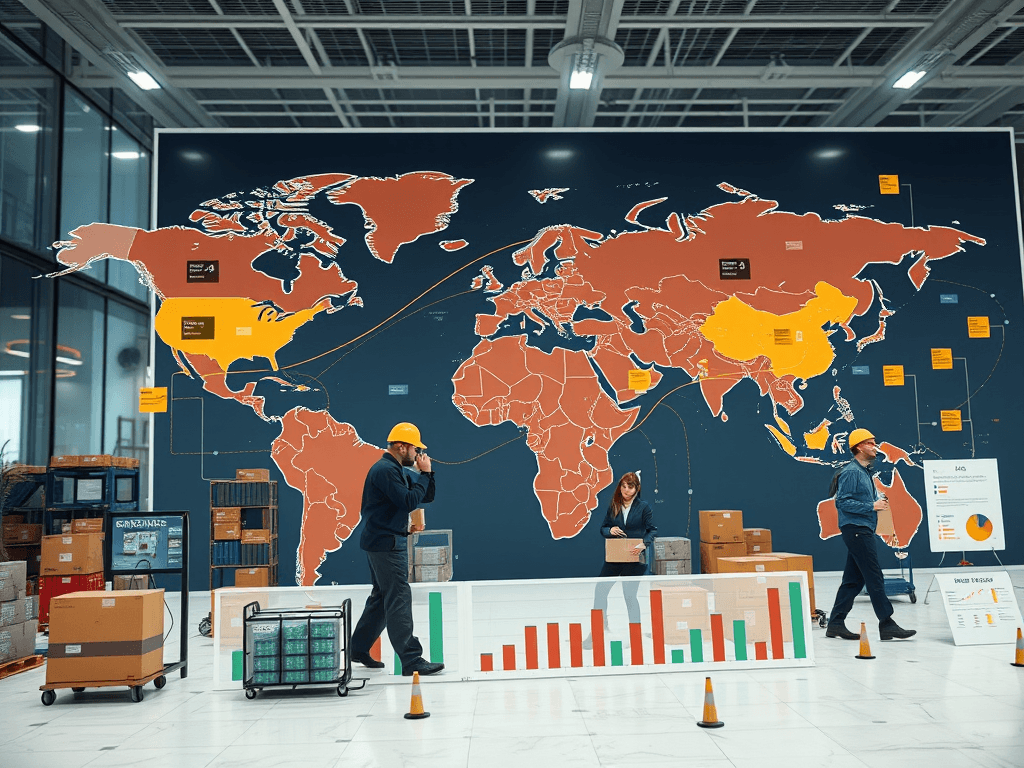
Economic nationalism is a policy approach where governments favor domestic businesses, labor, and industries over foreign competition. While it is often framed as protectionism, in 2026 it is more accurately described as strategic self-reliance.
Tariffs—taxes imposed on imported goods—are one of the most visible tools of economic nationalism. Unlike the blanket tariffs of earlier decades, today’s tariffs are more targeted. They focus on:
Critical industries such as semiconductors, energy, agriculture, and defense Countries viewed as strategic rivals or supply chain risks Products linked to national security, climate policy, or labor standards
The stated goals vary: protecting local jobs, reducing dependence on single-country supply chains, correcting trade imbalances, or responding to geopolitical tensions. The practical effect, however, is a fragmentation of global trade into regional and politically aligned blocs.
For investors and business leaders, tariffs are no longer short-term disruptions—they are structural features of the global economy.
How Tariffs 2026 guide Reshaping Economic Global Supply Chains
Supply chains in 2026 are being redesigned around resilience rather than pure cost efficiency. Companies that once relied heavily on single-country sourcing are now diversifying suppliers, relocating production, or adopting “friend-shoring” strategies—sourcing from politically aligned nations.
Key supply chain shifts include:
Regionalization of manufacturing, especially in North America, Southeast Asia, and the Gulf Higher inventory buffers to protect against tariff shocks and border delays Increased logistics complexity, as goods cross more borders with varying trade rules
Tariffs increase landed costs, but the hidden cost is uncertainty. Businesses now plan for multiple tariff scenarios, which has made trade compliance, customs classification, and documentation more strategic than operational.
This has also driven demand for cost control in adjacent areas. Many exporters and importers are actively seeking budget international shipping supplies to offset rising duties and transportation expenses. Packaging optimization, consolidated shipments, and smarter freight planning have become profit-preserving tactics rather than operational afterthoughts.
For deeper analysis on how companies are adapting their sourcing and logistics models, many executives now rely on supply chain insights by VersatilePath to stay ahead of structural trade shifts.
Impact on SMEs, Corporations, and Consumers
While large multinationals have teams dedicated to trade compliance and risk modeling, small and medium-sized enterprises (SMEs) face a steeper learning curve.
For SMEs, tariffs can:
Reduce margins overnight Disrupt supplier relationships Force sudden price increases that customers may resist
However, SMEs also have an advantage: agility. Smaller firms can pivot suppliers faster, test new markets, and adopt niche positioning that large corporations struggle to execute.
This is why adoption of logistics tools for small businesses has accelerated. Automated customs documentation, tariff calculators, and real-time shipping cost analysis are helping SMEs compete in a more regulated trade environment without building large in-house teams.
For large corporations, tariffs guide have accelerated:
Vertical integration (owning more of the supply chain) Strategic partnerships in tariff-friendly regions Increased lobbying and trade diplomacy efforts
For consumers, the impact is mixed. Some prices rise due to import duties, particularly for electronics, vehicles, and industrial goods. At the same time, domestic production incentives can stabilize local supply and, in some cases, create competitive pricing over the long term.
The broader consequence is that consumers are indirectly paying for resilience and national security through higher prices—but gaining stability in return.
Practical Business guide for Navigating Trade in 2026
In an era of persistent tariffs and economic nationalism, successful businesses are proactive rather than reactive. The most resilient companies are applying a combination of strategic, operational, and financial adaptations.
1. Diversify sourcing beyond cost considerations
Supplier selection now includes geopolitical alignment, trade agreements, and tariff exposure—not just price. Dual or triple sourcing is increasingly standard.
2. Build tariff costs into pricing models early
Instead of absorbing tariff shocks, leading firms transparently price risk into contracts and customer agreements.
3. Invest in trade intelligence and compliance
Understanding Harmonized System (HS) codes, rules of origin, and bilateral trade agreements can significantly reduce tariff exposure.
4. Optimize logistics and packaging
Reducing shipment volume, improving container utilization, and choosing the right Incoterms can partially neutralize tariff-related cost increases. This is where access to affordable solutions—such as budget international shipping supplies—directly supports profitability.
5. Leverage digital logistics platforms
Smart companies are integrating logistics tools for small businesses into their operations to automate paperwork, track regulatory changes, and forecast landed costs with greater accuracy.
6. Explore regional manufacturing and assembly
Even partial localization—final assembly or packaging in a tariff-friendly market—can change a product’s country of origin and tariff classification.
What This Means for Investors and Policy Watchers
For investors, economic nationalism introduces both risk and opportunity. Sectors aligned with domestic manufacturing, logistics technology, energy independence, and trade compliance services are benefiting from long-term policy tailwinds.
Policy followers should note that tariffs in 2026 are less about isolation and more about leverage. Governments are not abandoning trade; they are restructuring it around strategic interests.
The era of frictionless globalization may be over, but a more deliberate, politically aware global trade system is taking its place.
Actionable Takeaway
In 2026, tariffs are not temporary obstacles—they are permanent strategic variables. Businesses that treat trade policy as a core part of planning, invest in smarter logistics, and build resilient supply chains will not just survive economic nationalism—they will gain a competitive edge.




Откройте для себя комфорт и стиль с купить дизайнерский диван в москве — идеальный выбор для тех, кто ценит элегантность и высокое качество.
Выбор такой мебели требует внимания к пропорциям, материалам и функционалу.
Каркас, наполнитель и механизмы трансформации влияют на долговечность модели.
Стили оформления различаются формами, декоративными приёмами и выбором текстур и тканей.
Инвестиция в качественный дизайнерский диван окупается удобством, эстетикой и долговечностью.
Служба в ПВО Москвы — отличная возможность для тех, кто ищет стабильную карьеру и готов подписать контракт: служба в войсках пво
Такая кооперация позволяет обеспечить своевременное оповещение населения и скоординированные действия в критических ситуациях.
все о службе в бпла через москву – рассмотрите возможность поступления на бпла службу по контракту в Москве и узнайте о требованиях, выплатах и карьерных перспективах операторов дронов.
Такая служба сочетает в себе технические навыки, организационную дисциплину и ответственность за выполнение задач.
Hi community members, I just started working on a local area sustainability initiative and have been studying how LEED Neighborhood Development (LEED ND) certification influences community outcomes. I’m strongly interested in how projects combine environmental improvements with social and economic benefits—something that often seems hard in real-world contexts. I’ve come across some case studies that highlight various community engagement practices and measurable results, which I’ve linked here usgbc leed exam . I’d love to speak with those who have firsthand experience with LEED ND projects: what went smoothly in your communities, and where did things struggle? Sharing both wins and critiques could really help advance our understanding of what makes sustainable neighborhoods develop in practice. Looking forward to an productive and helpful discussion!
Discover high-quality resources for your next project at machine learning data, offering curated, ready-to-use collections for research and development.
It is critical that teams record origin, methods of acquisition, and known limitations.
Different tasks require tailored dataset structures and labeling schemes. Time-series and sensor datasets demand synchronized timestamps and noise characterization.
Ethical and legal considerations shape dataset creation and sharing policies. Implementing consent processes, openness, and governance structures supports ethical usage.
Evaluation datasets and benchmarks enable objective comparison of models. Maintaining datasets over time helps adapt to distribution shifts and new contexts.
Researchers and engineers must document provenance, collection methodology, and potential biases.
Hi friends! I’m now preparing for the CPEN exam and, being a clinician working in a remote area with no local study groups around me, I’ve been noticing a bit on my own in my prep journey. I’m quite eager to link up with people who are also taking on this exam. Does anyone know of active and welcoming online spaces or study groups where members frequently share content, discuss difficult topics, and offer advice? I encountered a few moderated groups on various platforms and niche nursing forums, like this one cpen exam , which seem promising. I’d love to hear your thoughts or experiences with any reputable groups that help keep energy up. Thank you ahead of time — I’m also delighted to share my personal notes and study techniques along the path!
Откройте для себя комфорт и стиль с диван дизайнерский — идеальный выбор для тех, кто ценит элегантность и высокое качество.
Стильные дизайнерские диваны играют ключевую роль в оформлении пространства, формируя визуальный центр комнаты.
Каркас, наполнитель и механизмы трансформации влияют на долговечность модели.
Подбор дивана под конкретный стиль интерьера облегчает достижение целостного образа комнаты.
Удобство в уходе за материалом обивки и её стойкость к загрязнениям — ключевые критерии выбора.
Если вы мечтаете о надежном и теплым жилье, обратите внимание на каркасные дома спб — выгодное решение для комфортной жизни в Санкт-Петербурге.
Такой подход уменьшает нагрузку на фундамент и сокращает расходы на его строительство.
Служба в ПВО Москвы — отличная возможность для тех, кто ищет стабильную карьеру и готов подписать контракт: как попасть в пво москвы
Координация с гражданскими ведомствами усиливает защиту города в мирное время и в кризис.
выплаты операторам бпла – рассмотрите возможность поступления на бпла службу по контракту в Москве и узнайте о требованиях, выплатах и карьерных перспективах операторов дронов.
Многие подразделения предоставляют жильё, обучение за счёт работодателя и курсы повышения квалификации.
Если вы мечтаете о надежном и теплым жилье, обратите внимание на каркасный дом под ключ в спб — выгодное решение для комфортной жизни в Санкт-Петербурге.
Важной задачей является обеспечение надежной защиты от влаги и паразитов.
Служба в ПВО Москвы — отличная возможность для тех, кто ищет стабильную карьеру и готов подписать контракт: набор в пво
Подразделения уделяют большое внимание морально-психологической подготовке личного состава.
бпла контракт москва – рассмотрите возможность поступления на бпла службу по контракту в Москве и узнайте о требованиях, выплатах и карьерных перспективах операторов дронов.
Служба по контракту в подразделениях беспилотных летательных аппаратов приобретает всё большую значимость в армии и в гражданском секторе.
Ищете стильный мерч браслет, который подчеркнёт идентичность вашей команды или бренда?
Браслет с логотипом привлекает внимание и дополняет образ.
Функции браслета выходят за рамки украшения и включают брендинг и идентификацию. Иногда такие браслеты служат бейджем участия в событии или символом принадлежности к группе.
Выбор дизайна требует внимания к деталям и сочетанию элементов. Форма, масштаб и расположение логотипа критически влияют на эстетику изделия.
Производство и тиражирование требуют учёта экономических и технологических аспектов. При большом тиражировании цена за штуку снижается, но индивидуальные изменения ограничены.
Закажите качественный изготовление браслетов с логотипом для продвижения вашего бренда уже сегодня.
Силиконовые модели удобны и подходят для массовых акций, а металлические выглядят солидно.
Мелкие элементы сложно воспроизвести на браслете, поэтому важна контрастная подача.
Аксессуар способствует поддержанию контакта с клиентами и повышению узнаваемости бренда.
Инвестиции в стильную упаковку часто окупаются за счет лучшего восприятия подарка.